Tuesday, September 29, 2009
Monday, September 28, 2009
Parsons on Christ the Center
 On the latest edition of Christ the Center, Burk Parsons joined us to discuss two books he has edited. A majority of the discussion centers around Assured by God: Living in the Fullness of God’s Grace, a wonderful collection of contributions on the reformed doctrine of assurance. Burk explains the importance of the doctrine for the Christian life.
The second book is also a collection of essays titled John Calvin: A Heart for Devotion, Doctrine, and Doxology, another great book about the great Geneva reformer. Of particular interest is chapter two, by Derek Thomas, which is a biography of Calvin that answers the question, "Who was John Calvin?" This book stands out from the multitude of recent Calvin titles in that it was written for the layperson. Listen to us discuss these two books with Burk here.

Sunday, September 27, 2009
God is Not Irrelevent
Jason Stellman, in his new book:
HT: Chris Larson
As the saints leave their houses each and every Lord's Day morning and assemble with the rest of God's people, both on earth and in heaven, they are making a much louder statement to the world than a fish emblem on their bumpers ever will (even one that is swallowing the Darwin fish with legs). Our goal, then, must be the exact opposite of what many churches -- both evangelical and liberal -- are attempting to do: "The [church's] theological task is not merely the interpretive matter of translating Jesus into modern categories but rather to translate the world to him. The theologian's job is not to make the gospel credible to the modern world, but to make the modern world credible to the gospel. And that's new."
Could it be, therefore, that when the faithfully-preached gospel of our dying and rising God seems irrelevant to modern man, it is man, and not God, who is irrelevant?
HT: Chris Larson
Thursday, September 24, 2009
Stellman on Iron Sharpens Iron
 Our fellow blogger, Jason Stellman, was on Chris Arnzen radio program Iron Sharpens Iron yesterday. The topic of course was Stellman's new book. The interview was very interesting and went in a few unexpected, yet pleasant directions. You should give it a listen. The audio of the interview can be found here.
Wednesday, September 23, 2009
Life in Christ
Based on the description, this book should be a good read.
Scholars have concluded that union with Christ is centrally important to Calvin's thought. But how does this idea actually function in his theology? In three wide-ranging case studies Mark A. Garcia explores this question.
After a discussion of historical and theological background, Garcia explains the way Calvin understands the Apostle Paul to connect good works to eternal life in the context of union with Christ. The next study then turns to the relationship of Christology and pneumatology in sacramental union or communion with Christ. In the third study the author investigates the role of Christ, the Spirit, and the Eucharist in Calvin's critique of Andreas Osiander's views of justifying union with Christ. The result is a comprehensive and yet focused analysis.
This book attempts to explains not only the distinctive nature of Calvin's response to Rome on justification, but why this response must be carefully distinguished from that of his Lutheran counterparts. The fruit of these investigations is the first extensive demonstration that Calvin's exposition of union with Christ in relating justification and sanctification points to an emerging Reformed theology of justification that diverges from the Lutheran tradition. Calvin's exegetical and theological model of union with Christ accents the importance in the early Reformed tradition of the relationship between Christology and salvation.
Scholars have concluded that union with Christ is centrally important to Calvin's thought. But how does this idea actually function in his theology? In three wide-ranging case studies Mark A. Garcia explores this question.
After a discussion of historical and theological background, Garcia explains the way Calvin understands the Apostle Paul to connect good works to eternal life in the context of union with Christ. The next study then turns to the relationship of Christology and pneumatology in sacramental union or communion with Christ. In the third study the author investigates the role of Christ, the Spirit, and the Eucharist in Calvin's critique of Andreas Osiander's views of justifying union with Christ. The result is a comprehensive and yet focused analysis.
This book attempts to explains not only the distinctive nature of Calvin's response to Rome on justification, but why this response must be carefully distinguished from that of his Lutheran counterparts. The fruit of these investigations is the first extensive demonstration that Calvin's exposition of union with Christ in relating justification and sanctification points to an emerging Reformed theology of justification that diverges from the Lutheran tradition. Calvin's exegetical and theological model of union with Christ accents the importance in the early Reformed tradition of the relationship between Christology and salvation.
Monday, September 21, 2009
Sunday, September 20, 2009
Friday, September 18, 2009
Tom Schreiner on Christ the Center
Thursday, September 17, 2009
Imputation and Impartation: Union with Christ in American Reformed Theology
This book explores the history of the theme of 'union with Christ' in the Reformed tradition. After chapters on the legacy of Calvin and Reformed Orthodoxy, the author uncovers three trajectories in American Reformed theology in which salvation as union with Christ is understood in remarkably different ways. The subsequent twentieth-century history of the these is also explored. This detailed examination of New England Calvinism, Princeton Calvinism, and the Mercersburg Theology highlights the historic diversity present in Reformed thought, and the implications of that diversity for contemporary Evangelical and Reformed thought. It seems like it would be a good read for those interested in the current discussion on the relationship of union with Christ with justification and the rest of the ordo salutis. Dr. Richard Gaffin says that this book is, "a welcome and useful contribution . . . in Reformed soteriology."
Wednesday, September 16, 2009
Bring the Books Has a Sponsor
 We are happy to announce that Westminster Theological Seminar Books has sponsored Bring the Books. You will notice (thanks to Camden Bucey) that there is a new widget on the left panel of the blog. This widget will display some of the outstanding books available at Westminster's Online Bookstore. So we encourage you to click the widget often to check out the great deals they offer on fantastic books and other resources.
Saturday, September 12, 2009
Encouraging Young Ministers
Nick Batzig has a great post on building up young men in the Church. Below is an excerpt from the post.
I have frequently heard well meaning ministers and theologians discourage young theological students by insisting that they must understand that they are not of the caliber of the great theologians of church history...John Calvin was only 27 when he published his first edition of the Institutes, and he had been a Christian for just one year. If we say, “Yes, but that was John Calvin,” are we not trusting the man rather than to the One who gives gifts to men? Young men must be humble, but, by all means, they must use the gifts God has given them for the building up of the church. The apostle Paul certainly taught accordingly when he wrote to Timothy, “Let no one despise your youth, but be an example to the believers in word, in conduct, in love, in spirit, in faith, in purity (1 Tim 4:12).” It is incumbent upon older ministers and theologians to actively promote the gifts they see, however seemingly small they may be, in younger ministers.
Friday, September 11, 2009
Rick Phillips on Christ the Center
 I once again had the privilege of being a panelist on Christ the Center. We welcomed Richard Phillips to discuss his new book The Masculine Mandate: God’s Calling to Men. The book is a reaction to recent cultural trends on what it is to be a man, specificly those found in John Eldredge’s mega-hit Wild at Heart. However this book is much more than a simple reaction, Phillips promotes a positive biblical approach to masculinity by touching on biblical anthropology and God’s specific call that men should “work” and “keep” as instructed to do in Genesis. The audio of this interview can be found here.
Thursday, September 10, 2009
Tuesday, September 8, 2009
Schreiner on Christ the Center
 It is my pleasure to announce that Dr. Tom Schreiner will be our guest on Christ the Center this Friday starting around 2 pm eastern. You can listen in live and chat with us here. We will be discussing his outstanding book New Testament Theology: Magnifying God in Christ, particularly his chapter on the Kingdom of God. This should be a great show. If you have any questions for Dr. Schreiner you can email them to me or leave them in the comment section of this post.
Monday, September 7, 2009
Friday, September 4, 2009
The Place of Anger in the Christian Life
 I just finished listening to a sermon on Ephesians 4:26-27 by my friend Justin Estrada about anger in the Christian life, which can be heard here. Justin graduated from RTS last May and is now on his way to Oxford to work on a Ph.D. in Old Testament. I would commend the sermon to your listening. Justin does a fine job in explaing the text and passionately applying it to the people of God. I am particularly thankful for Justin's pointing out of the proper place for anger within the Christian worldview and the guardrails he sets for it.
Tuesday, September 1, 2009
Ligon Duncan Responds to the NIV Annoucement
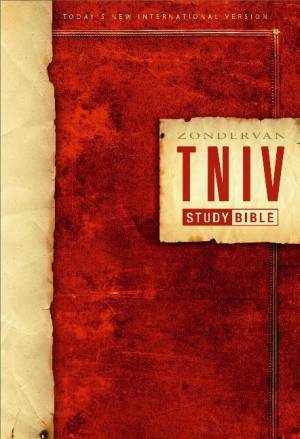 The Council on Biblical Manhood and Womanhood have posted a wonderful response from Ligon Duncan on the announcment made by Zondarvan earlier today about the future of the TNIV and NIV Bible translations. In the response Dr. Duncan discusses some of his thoughts on the issue. The following comments were most notable to me.
When the TNIV first surfaced, the Council on Biblical Manhood and Womanhood emphatically criticized the CBT's translation choices in numerous places, especially relating to gender-neutral language. We believe that a flawed translation philosophy resulted in the TNIV presenting English readers with an unjustified rendering of the gender language of the original Hebrew and Greek manuscripts of the Bible. It is our sincere hope that this new revision of the NIV will do better. We await the new product of the CBT with expectancy. And when we have the opportunity, we will review it for the larger Christian public with rigor and charity.I especially appreciate that Zondervan and Biblica have both privately and publically acknowledged that they made serious mistakes of process, and that the CBT has committed itself to re-examine the gender-related changes that appeared in the TNIV. This is a welcome and humble approach.
Dual Citizens
 Last night I came home from class to find a package on my front door step. At first I had no idea what was in the box, but once I saw the return address I knew it was my review copy of Dual Citizens: Worship and Life Between the Already and the Not Yet by Bring the Books very own, Jason Stellman. When I opened the package I was pleasently suprised that this new volume was printed in hardback. I look forward to cracking this one open and seeing what Stellman has to say about living as an exile in this world.
Dr. D. G. Hart has the following to say about this new book from Reformation Trust.
The subject of Christ and culture has never been as popular among conservative Protestants in the United States as it is today, and the topic has never needed as much attention from the perspective of the church. It gets that attention in this important book by Jason Stellman. Dual Citizens will certainly upset those used to thinking of Christ as mainly the transformer of culture. But for genuine wisdom not only on the culture wars, but on the culture, ways, and habits of the church, Stellman's discussion is the place to go.
Subscribe to:
Posts (Atom)